


 Menu
Menu


‘Another attack on our industry’: Hospitality reacts to ‘disappointing’ Budget
Hospitality operators have warned prices may have to rise and more venues could close off the back of the changes
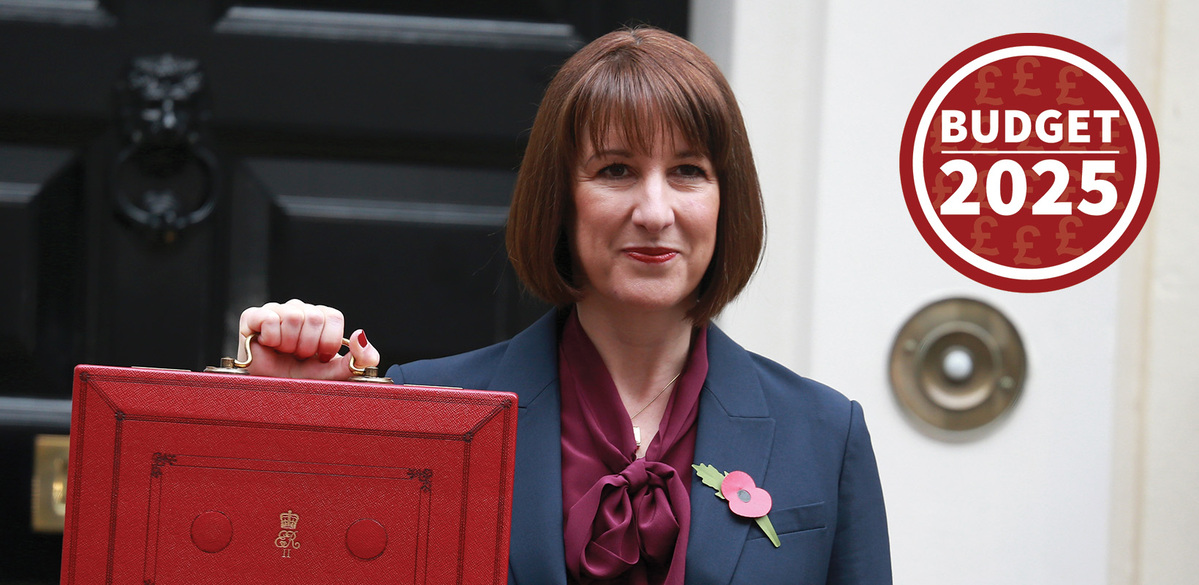
Hospitality operators have warned the Budget is yet another "attack" on an industry that has faced an onslaught of job losses in the past year.
Operators told The Caterer they feared steep increases to minimum wage rates could disrupt team structures, while hoteliers said the introduction of a so-called tourist tax could make the UK a less attractive place for international travellers.
Business rates will be permanently cut for more than 750,000 retail, hospitality and leisure properties, but UKHospitality warned many firms would still see a rise in their bills.
Some operators were more positive and praised plans for free apprenticeship training for under 25-year-olds, while others said the Budget was “nowhere near as bad as the last”.
More details on what the Budget means for hospitality can be found here.
How has hospitality reacted to the 2025 Budget?
Read More


David Connell, group director of operations, Exclusive Collection hotels

“While we welcome the increases to pay and want to support our people, this has to be in conjunction with business growth, and sadly the constant and unfair attack on hospitality is making this harder than ever.
“The tourist tax is another attack on our industry, and while the government stated it is to bring us in line with our European neighbours, they have conveniently omitted to mention that these same businesses in Europe pay a much lesser rate of VAT than their UK counterparts, so all this achieves is making the UK less attractive for tourists, meaning we are not competing on a level playing field.
“Our adaptability and resilience as an industry is our superpower, but there are limits. Unfortunately, many more hospitality businesses will close next year as a result, putting more skilled workers out of work.”
Veryan Palmer, hotel director, the Headland hotel, Cornwall

“I wasn’t expecting a magic wand to be waved. There are a few little things that I was actually quite pleased to see in the Budget, such as the training for under 25-year-olds on apprenticeships that will now be free for SMEs.
“I think that the rise [in minimum wage rates] is another tough thing for hospitality. Previously, hospitality had a good pay structure as soon as you started to climb and progress. But now, you might have a 25-year-old who has probably got seven years of hospitality experience being paid similarly to an 18-year-old who is fresh out of school, so there is this squeeze in the middle. It creates a very strange dynamic in those sorts of supervisor and upward salaries.
“I just really hope that we don’t lose more hospitality businesses in Cornwall, which is happening every day at the moment. People are shutting, closing, finishing. And it is very, very tough times for a lot of people down here. We’re so seasonal, we’re so rural, that it’s very challenging.”
Everett Fieldgate, chief executive, Creams Café

“As a dessert café operator employing a large number of young people, we fully support fair pay and want our teams to thrive. However, the government’s decision to raise the National Minimum Wage for all age groups by up to 8.5%, well above inflation, represents a direct cost to businesses at a time when the high street is already under immense pressure.
“For a business like Creams, this will amount to an incremental cost increase of £1m per year at system level. Such an increase will no doubt dramatically impact many businesses across the high-street and hospitality sector in general. As such, this policy risks failing the very people it purports to help.”
James Underhill, finance director, Chickpea Group pubs
“Overall, it was nowhere near as bad as the last autumn Budget – we didn’t take as much of a hammering, not that they could have done much more.
“Our biggest cost pressure is employing people, so minimum wage going up for a third year in a row was another blow – but it was expected. The gap closing between 18-, 20- and 21-year-olds is interesting as it’s becoming increasingly expensive and there are more barriers to entry now for younger people entering the workplace.
“To counteract the employment costs, we are going to have to consider prices and efficiencies when it comes to labour – be that forecasting, budgeting and control around rotas.
“The news about apprenticeships is good. We’ve hired apprentices in the past as there are tax benefits of doing so, so this is even more of incentive. They are committed to the industry and likely to be with us in the long run.
“The broader piece is the impact on our customers and the indirect impact on us as a result. The amount of discretionary spend is shrinking so we need to make sure our offering is good enough that eating and drinking out is worth the money – so we concentrate on quality, our service and training our people.”
Paul Askew, chef patron, the Art School Restaurant, Liverpool

“There’s nothing being done with the VAT, which for me is the number one thing the government have to sort out for our industry. I’ve been saying it for decades. It’s not just about politics; it’s about doing the right thing for a business.
“UKHospitality and the rest of us have been part of the #TaxedOut campaign and we’ve fought like hell. We’ve spoken to MPs and we’ve spoken to ministers. I even spoke directly to Rachel Reeves because, believe it or not, she was the first person through our door with the Labour Party conference in Liverpool. So I gave her a letter saying ‘here’s my thoughts from the industry. I would love your thoughts and I’d love to have a reply’, which of course I never got.
“Aren’t we the ones that voted for them and aren’t they paid for by taxpayers’ money? And yet the government seem to be incapable of listening to what is needed in a very important industry that can be a solution for them. If they let us thrive, we can employ people quickly. We can be nimble, we can grow, we can pay more taxes if we can afford them. But if they carry on this road, independent restaurants are going to be extinct. We’re going to be dinosaurs, honestly. It’s absolutely scandalous what they’re doing.”
James Robson, co-founder and chairman, Fallow

“A bland Budget littered with further stealth taxes. I need more reasons to take further entrepreneurial risk in this country. The only upside I see is that a small proportion of new businesses could benefit from sites becoming available with the ongoing bloodbath on the high street.
“As usual, the larger, well-financed, often overseas-owned companies will be able to take a longer-term view and take control of prime UK business and property assets. The currency advantage to purchase from overseas is becoming increasingly attractive. I’m now simply protecting the three great restaurants we have – Fallow, Fowl and Roe – and looking at overseas for growth.”
Simon Dodd, chief executive, Young’s pubs

“Our teams sit right at the heart of every Young’s pub. We are proud to back fair pay, but these wage increases land another £1.4b blow to our sector, adding to the significant pressure we are already grappling with.
“The government has not gone far enough to tackle the other unfair costs weighing down pubs – and has added more pressure with the rise in alcohol duty, so it will continue to be challenging for pubs to keep rewarding our people and keep doors open.
“As a result, it will just get harder for young people to find jobs in an industry that’s always been a major employer for them.”
Evelina Girling, chief executive, London Cabaret Club
“The government’s decision not to address VAT cuts for the hospitality and entertainment sector is deeply concerning – particularly for smaller venues who would have benefited from a relief to offset increased National Insurance contributions and rising energy costs. As a venue that has operated in central London for more than a decade, we see first-hand how many independent operators are struggling or being forced to close. More support is needed to keep London’s cultural and community spaces alive.”
Ronan Harte, chief executive, BaxterStorey

"The expansion of the apprenticeship funding is welcome. It strengthens the talent pipeline, creates more opportunities for young people, and helps build workforce certainty.
"However, the VAT reduction issue has once again been passed over. For many hospitality businesses already contending with rapidly rising costs, thinning margins and a labour shortage, support that lowers the operational pressures would have been far more impactful."
Kate Nicholls, chair, UKHospitality

“Today the chancellor recognised the importance of hospitality and provided a permanently lower business rates multiplier for hospitality businesses – reforms secured by UKHospitality.
“However, the 5p discount is only a quarter of the maximum 20p discount the government proposed last year.
“This is particularly frustrating given changes to business rates valuations will mean that many hospitality businesses’ tax bills will still significantly rise, alongside increases to the minimum wage adding extra cost. Business tax rates for hospitality must continue to fall for the rest of this parliament.
“Hospitality remains under significant cost pressures, with the highest tax burden in the economy. We will continue to campaign for additional support for the sector, including further business rates discounts.”
Neil Braude, chief operating officer, Imperial London Hotels
“The hospitality industry has shown incredible tenacity over the past 12 months, and despite our collective call for a Budget that recognises its contribution to the economy, the policies announced today are disappointing, use the industry as a cash cow and will only put more pressure on hospitality businesses.
“While lower business rates are good news for parts of the industry, larger owner operators like us will see limited benefits from these measures. We support anything that cultivates the neighbourhoods we operate in, and hope that the relief smaller operators will see will help to make our locations vibrant and dynamic places to live, work, and explore – but the supplementary charge on properties with a rateable value above £500,000 will have a knock-on effect on larger operators that employ and attract thousands of people to their neighbourhoods each year.
“The continued pressure on household incomes as a direct result of the lock on income tax will mean that restaurants, bars and hotels will need to do even more to get customers through the door and manage costs. While the industry will continue to respond to these challenges, it will require more investment and that – paired with softer demand and more bureaucracy – will make it hard for some to strike the right balance.”
Tim Rumney, chief executive, BWH Hotels GB

“The sector doesn’t want handouts – we want a fair tax environment to get back to growth. We create jobs across the country, not just in major cities, but in towns and coastal communities. Give us a level playing field and we’ll do what we do best: create employment, welcome visitors and keep Britain thriving.”







More from The Caterer
Most Popular



The Caterer People Summit 2026
 Thu May 14, 2026
 The Line, London
The Acorn Awards 2026
Sun Jun 7, 2026
The Cateys 2026
Tue Jul 7, 2026
Natural & Organic Food Show
Wed Sep 16, 2026ExCel London


The Caterer provides trusted hospitality news, analysis and trends for restaurants, hotels and catering professionals.

Jacobs Media is a company registered in England and Wales, company number 08713328. 3rd Floor, 52 Grosvenor Gardens, London SW1W 0AU.
© 2026 Jacobs Media
