


 Menu
Menu


‘Unless we do something with the data, it is meaningless’: Compass One’s Ben Dawson on turning numbers into action

According to Ben Dawson, sometimes it’s better to get something done rather than wait for perfection. He explains how E15 Business Intelligence translates streams of data into decisions
Last year data specialist Ben Dawson was appointed head of E15 Business Intelligence at Compass One, which brings together Compass Group UK & Ireland’s ESS, Healthcare and One Retail sectors.
E15 Business Intelligence is a client-focused insights and analytics platform, supported by a community of data professionals, who collaborate with clients to deliver insights to drive business growth.
Dawson, who joined Compass Group UK & Ireland eight years ago, has worked in several data-led analytical and commercial roles and now leads a team of 10 data and business intelligence professionals, who work on areas including data analytics and data science.
Ahead of his appearance at The Caterer’s inaugural Tech Confex, Dawson spoke about his learnings in his role, why data is key to achieving effective outcomes, and his love of “joining the dots” to ensure a seamless end-to-end process.
Can you explain the background to E15 Business Intelligence?
It’s a global community of data professionals within Compass Group. It was born in Compass in the US seven years ago and we adopted it as an umbrella brand for our data services within the UK. I am part of Compass One, which is the area of Compass Group in the UK that focuses on our specialist services in Medirest, ESS and One Retail, which makes up a large proportion of Compass Group UK & Ireland. We launched our E15 brand 18 months ago. It’s about connecting the data all the way through to decision and action – it’s very much end-to-end.
You started in your role 18 months ago – what have you learned in this time?
The main lesson for me is about taking action and doing something with that data, rather than just looking at the technicalities behind it. There is also the aspect of prioritising our time; we don’t need to aim for absolute technical perfection to make a meaningful impact to clients, colleagues and consumers; instead, we are learning where to draw the line.
Within your Medirest estate, what objectives are clients particularly focused on and how is data supporting this?
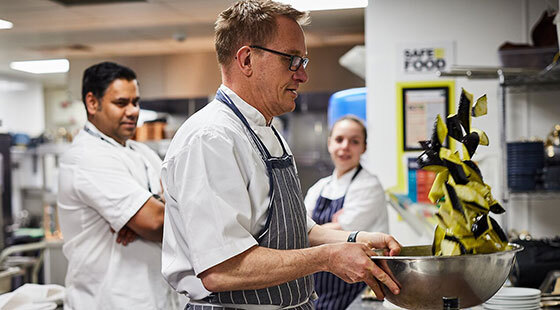
For Medirest, its organisational objectives are around patient satisfaction and our function is to support our clients to meet those objectives. People by far make up the biggest contributor to our operation within Medirest, so when those people aren’t there, because of problems with shift patterns, for example, we can react to it in the best way possible. We’ve created – and are trailing right now – a tool that forecasts when we’re likely to have absence at a shift level so that the operator can then do something about it, such as pre-emptively covering it with additional shifts so that we can maintain that level of patient satisfaction.
And likewise, what is your ESS estate particularly focused on?
Offering menus with the correct level of nutrition is paramount within ESS, and balancing the amount of protein we need on a menu becomes a little bit more challenging when we overlay that with our sustainability mission. Combining both the sustainability data with the nutritional data and crafting a menu with our culinary teams is probably the area where we support our ESS clients the most.
Can you share with us an example of where data has been turned into positive action?
Within E15, we’re fortunate to have workforce management specialists who conduct very detailed time and motion studies on a particular location, which has particularly benefited our Medirest estate. Through that, we’ve been able to make sure we get the right people in the right place at the right time to enhance patient experience. We also look at the bigger picture, such as using data to scrutinise and improve our menus to achieve our sustainability goals.
Managing various internal teams as well as clients to meet their various objectives must be challenging – how do you manage this?
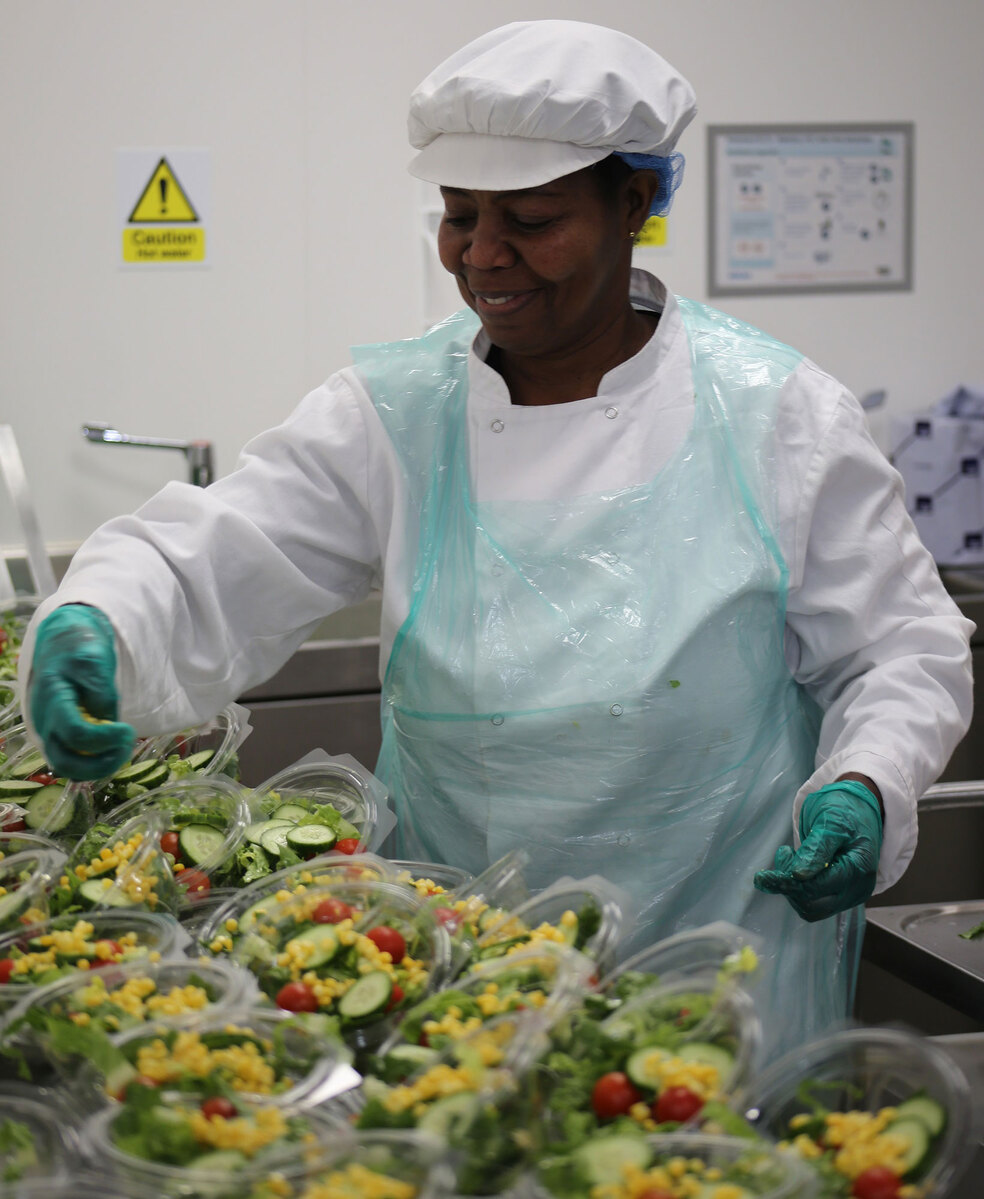
E15 has a very strong team that consists of technical experts and subject matter experts, but understanding the business context is important too. My job, and what I love doing day-to-day, is connecting those dots between the team and across the business itself to understand what our business and our clients are aiming for and how that compares with what we’re bringing to the party.
“We have almost two lanes that we operate in: in some areas, done is better than perfect; in others, perfect is required”
At the Tech Confex, what three things do you want the audience to take away from Compass One’s session?
End-to-end is key. I can’t stress that enough. We’ve got the capabilities to bring the data into our systems, we can do the analysis, but, unless we do something with it and do something differently as an organisation and with our clients, it is effectively meaningless.
The second message will be around the directional evidence of what we do. Taking sustainability as an example, we have to be audited on our sustainability statements, so everything has to be perfect. However, when we are making operational decisions about our menu, we have enough data to make better decisions without it being perfect, which allows us to increase the reporting frequency and make decisions faster. Then, we can see those outcomes in the results when they come through the auditory process. We have almost two lanes that we operate in: in some areas, done is better than perfect; in others, perfect is required.
Lastly, I want to emphasise simplification of the business processes and knowing which systems we want to integrate with, because you can’t integrate with everything at the same time, and that’s where prioritisation comes in.
Hear more from Ben Dawson

Dawson will be speaking at The Caterer’s upcoming Tech Confex on Wednesday 25 June about how hospitality businesses can turn data into action




More from The Caterer



Most Popular



The Caterer People Summit 2026
 Thu May 14, 2026
 The Line, London
The Acorn Awards 2026
Sun Jun 7, 2026
The Cateys 2026
Tue Jul 7, 2026
Natural & Organic Food Show
Wed Sep 16, 2026ExCel London


The Caterer provides trusted hospitality news, analysis and trends for restaurants, hotels and catering professionals.

Jacobs Media is a company registered in England and Wales, company number 08713328. 3rd Floor, 52 Grosvenor Gardens, London SW1W 0AU.
© 2026 Jacobs Media
